When should cracks in walls worry you? Use four tests: width (over ~5mm deserves attention), direction (diagonal and stepped patterns matter more than straight hairlines), behaviour (growing or reopening beats static), and company (cracks plus sticking doors, sloping floors or external mirroring escalate concern). Most cracking fails all four tests and is cosmetic; cracking passing two or more justifies a professional assessment before repair.
The BRE damage categories
BRE Digest 251 — the UK's standard reference — grades visible damage 0 to 5:
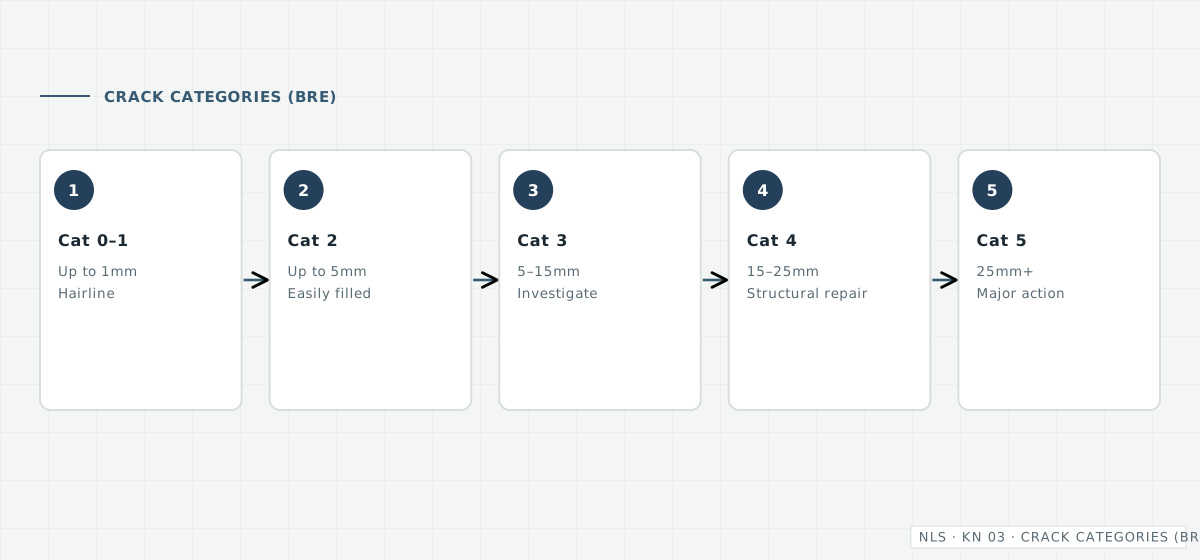
| Category | Width (approx.) | Meaning |
|---|---|---|
| 0 | <0.1mm | Hairline; negligible |
| 1 | ≤1mm | Fine; decoration-level |
| 2 | ≤5mm | Slight; easily filled, may show externally |
| 3 | 5–15mm | Moderate; repointing/masonry repair; doors stick |
| 4 | 15–25mm | Severe; sections of wall need work; service damage |
| 5 | >25mm | Very severe; partial rebuilding; stability at risk |
Most household cracking sits at 0–2. Assessment matters from category 2–3 upward, or wherever behaviour and pattern raise the other flags.
Reading direction and pattern
- Vertical hairlines in plaster: shrinkage, board joints — usually cosmetic
- Diagonal from opening corners: differential movement — the pattern that warrants attention
- Stepped through mortar joints: masonry accommodating movement — assess
- Horizontal along a bed joint: possible wall-tie corrosion or lateral load — assess
- At junctions (extension/main house, wing/terrace): differential settlement — often benign, worth confirming
- Ceiling cracks with sagging: support or overloading question — assess
Common causes
In rough order of frequency: plaster and material shrinkage; thermal movement (long walls, south faces, junctions of different materials); normal settlement in newer construction; moisture-cycling of clay ground (seasonal opening and closing); alteration effects (removed walls, new openings, loft loads); lintel or wall-tie deterioration; and — less often than feared — subsidence or heave. New-build owners note: minor drying-out cracking in the first year or two is expected and typically a snagging/decoration matter.
Monitor, fill, or call someone?
Fill and decorate when cracking is hairline, static, and pattern-benign. Monitor when unsure: pencil-date the crack ends, photograph with a ruler, recheck monthly and after season changes — movement over time is the single most useful fact you can hand an engineer. Assess professionally when any width/direction/behaviour/company flag is raised, before any structural repair, and always before buying or selling on the strength of a crack. Our crack severity checker walks through the triage; it guides, it doesn't diagnose.
This guide provides general information only and is not formal structural advice for any specific property. The cause of movement or damage should always be established by proper professional assessment before repairs are commissioned.