What should Islington property owners watch for structurally? The recurring themes are alteration-related: removed spine walls and chimney breasts in converted flats, side-return extensions changing rear-wall support, loft beams in shared party walls, and cracking that needs classifying as historic settlement versus live movement. Islington's dense terraces also make party wall procedure a near-universal companion to building work.
Structural services available in Islington
Property owners in Islington most commonly arrange structural surveys, crack assessments, subsidence investigations and design work for extensions and loft conversions. Your enquiry is triaged by phone or form, then arranged with an appropriate independent qualified provider covering Islington.
Islington's housing stock
From the Georgian set pieces around Canonbury and Barnsbury to the tighter Victorian terraces of Holloway and Finsbury Park's borders, Islington's stock is overwhelmingly terraced, solid-wall brick, and converted — upper-floor flats above ground-floor flats above cellars. Ex-council estates and modern infill add variety, but the engineering workload here is period-terrace workload.
Why Islington properties experience structural movement
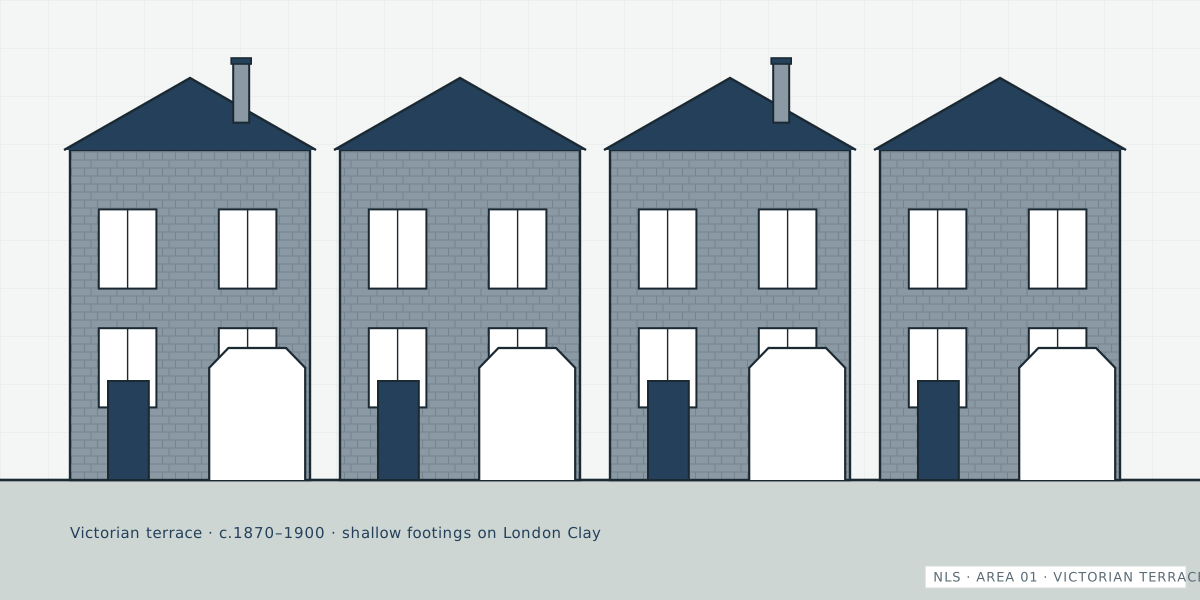
Terraces behave as systems: party walls carry neighbours' floors as well as yours, and an alteration three doors down can telegraph along the row. Add shallow original footings over clay in much of the borough, Victorian drainage at end of life beneath long narrow gardens, cellar dampness softening base masonry, and the sheer intensity of conversions — and most Islington 'movement' questions resolve into alteration history rather than ground failure. The assessment's job is to prove which.
Common structural concerns in Islington
- Removed walls and chimney breasts in flat conversions, often undocumented
- Side-return extension steels and their bearings
- Cracking above and around cellar/basement level
- Party wall matters on nearly every project
- Bowing front parapets and lintel deterioration on older terraces
- Drainage-related movement at rear closet wings
Property risk overview — Islington
| Property type | Typical era | Points worth checking |
|---|---|---|
| Georgian terrace (Canonbury/Barnsbury) | 1790s–1840s | Timber lintels and bressummers; historic lean; cellar condition; conversion history |
| Victorian terrace | 1850s–1900s | Spine wall alterations; closet-wing movement; parapets; drainage age |
| Converted flat | Any period | Certificates for structural alterations across all flats; freeholder records |
| Ex-industrial/warehouse conversion | 1880s–1930s | Floor loadings; steel/cast-iron condition; conversion documentation |
Advice for homebuyers in Islington
For Islington flats, the highest-value pre-purchase question is documentary: which walls have been removed anywhere in the building, and where are the certificates? Ask early through solicitors, and where the answer is vague, price a structural inspection into the process. For houses, check the rear closet wing — the most movement-prone element of the standard terrace.
Advice for landlords in Islington
Islington's licensing-heavy rental market rewards documentation. Keep an engineer's letter on file for any historic cracking, respond to tenant reports of new movement quickly, and before refurbishments involving wall removals, get calculations and Building Control sign-off — retrofitting paperwork later costs more.
When to call a structural engineer
Arrange an assessment promptly if cracking is new, widening or reopening; if doors and windows have started sticking without an obvious cause; if floors slope or bounce; if walls bulge or lean; or if a survey, lender or insurer has asked for an engineer's opinion. Early assessment is almost always cheaper than late repair — and a documented "no significant issue" protects a future sale. The when-to-call guide covers the decision in detail.