What are the signs of subsidence? Typical signs include diagonal cracks that are wider at the top than the bottom, cracks appearing suddenly after dry weather, cracks wider than about 3mm around doors and windows, rippling wallpaper at wall/ceiling junctions, sticking doors and windows, and gaps opening between walls and extensions. These signs do not confirm subsidence — thermal movement and normal settlement produce similar symptoms — which is why a proper investigation matters.
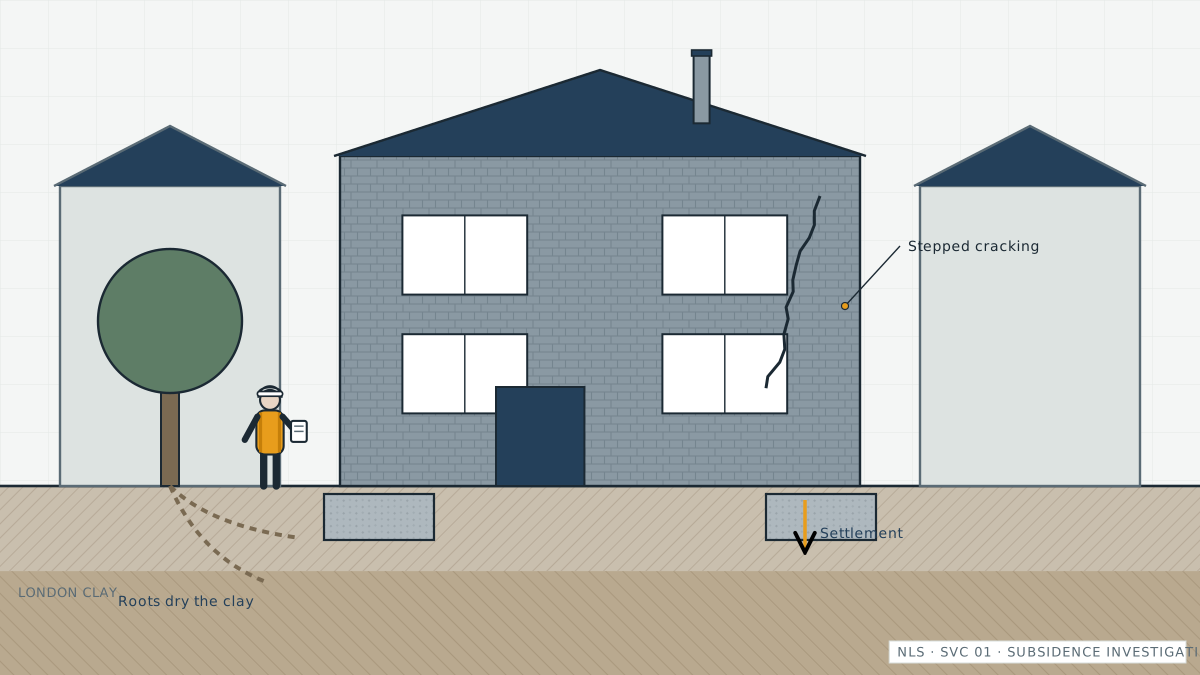
The word "subsidence" causes more anxiety among London homeowners than almost any other, largely because of what it can do to insurance premiums and sale prices. The reality is more manageable: most investigated movement turns out to be historic, seasonal, or repairable without underpinning. The critical step is a structured investigation that establishes the cause — because treating the symptom (filling cracks) without the cause guarantees the problem returns.
When is this service needed?
- New or widening diagonal cracking, particularly after prolonged dry weather
- Cracks that reopen after redecoration or previous repairs
- An insurer has asked for evidence before progressing a claim
- A survey or valuation has raised the possibility of subsidence
- Movement near large trees, old drains or recent excavation
- You are buying or selling a property with a subsidence history
Warning signs to look for
- Diagonal cracks wider at the top, often near openings
- Cracks visible inside and outside at the same location
- Sudden cracking during or after long dry spells
- Doors and windows sticking or dropping out of square
- Gaps between the main house and an extension or bay
- Sloping floors towards one corner or wall
How the assessment process works
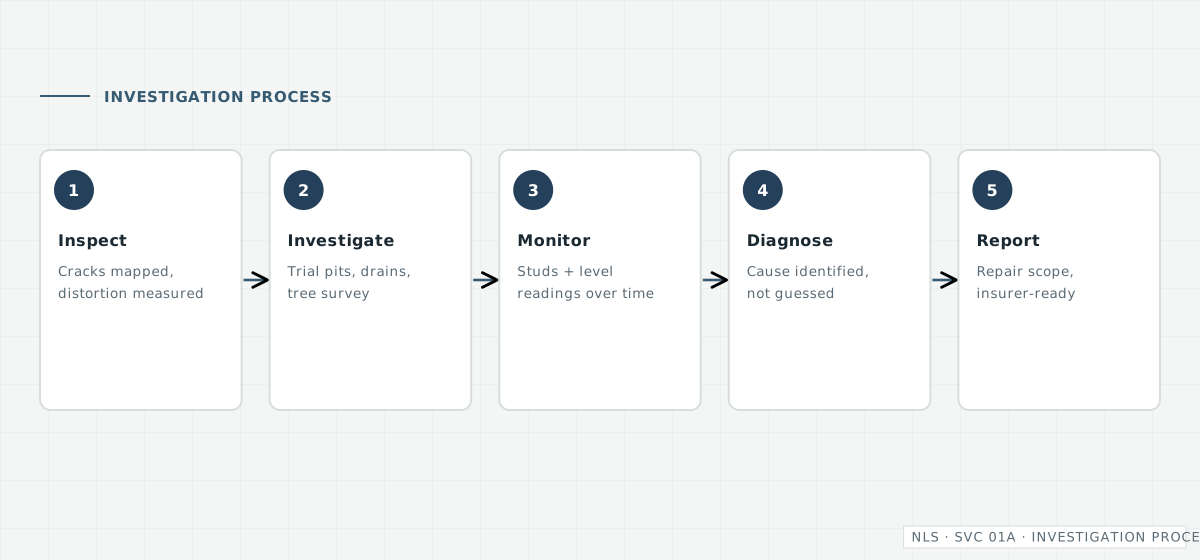
Initial assessment
An engineer inspects the crack patterns, distortion and site context — trees, drains, slopes, recent works — to judge whether subsidence is plausible.
Investigation
Depending on findings, investigation may include drainage CCTV surveys, trial pits to expose foundations, soil sampling, and root identification.
Monitoring
Where movement must be proven ongoing or stable, crack monitoring over a period of months distinguishes progressive subsidence from seasonal cycling.
Diagnosis and plan
The output is a diagnosed cause and a proportionate remedy — often drain repair or tree management rather than underpinning.
What you typically receive
- A written assessment of whether subsidence is the likely explanation
- A defined investigation scope (drains, trial pits, monitoring) where needed
- Interpretation of monitoring results over time
- A recommended remedial route and its rationale
- Documentation suitable for insurers and future buyers
What does subsidence investigation cost?
An initial engineering assessment typically sits in the same range as a structural inspection (broadly £250–£750 in London). Where physical investigation is needed, drainage surveys, trial pits, soil analysis and monitoring each add cost — but where an insurance claim is accepted, insurers commonly fund investigation. Never commission underpinning on the strength of visible cracks alone; investigation first is both the industry-standard and the cheaper path.
Who this service is for
- Homeowners with unexplained or worsening cracking
- Policyholders navigating an insurance claim
- Buyers and sellers of properties with a movement history
- Landlords with cracking reported by tenants
- Estate agents needing a transaction unblocked
North London property context
Much of North London sits on London Clay — a shrinkable soil that loses volume in dry summers and swells in wet winters. Combine that with dense street-tree planting (planes, oaks, poplars), Victorian foundations often less than half a metre deep, and ageing clay drainage runs, and you have the classic North London subsidence recipe. Areas on the clay belt such as Barnet, Enfield, Finchley and Muswell Hill see it most; the tree roots guide and drainage guide cover the two most common triggers.