What causes cracking in Enfield houses? The usual trio: clay shrink–swell cycling shallow interwar and Victorian foundations (worst after dry summers), leaking pre-war drainage softening supporting ground, and tree roots drying clay near foundations. Enfield's interwar cavity stock adds wall-tie corrosion — horizontal cracking along mortar beds — now common at this housing's age. All four are routinely diagnosable and fixable.
Structural services available in Enfield
Property owners in Enfield most commonly arrange structural surveys, crack assessments, subsidence investigations and design work for extensions and loft conversions. Your enquiry is triaged by phone or form, then arranged with an appropriate independent qualified provider covering Enfield.
Enfield's housing stock
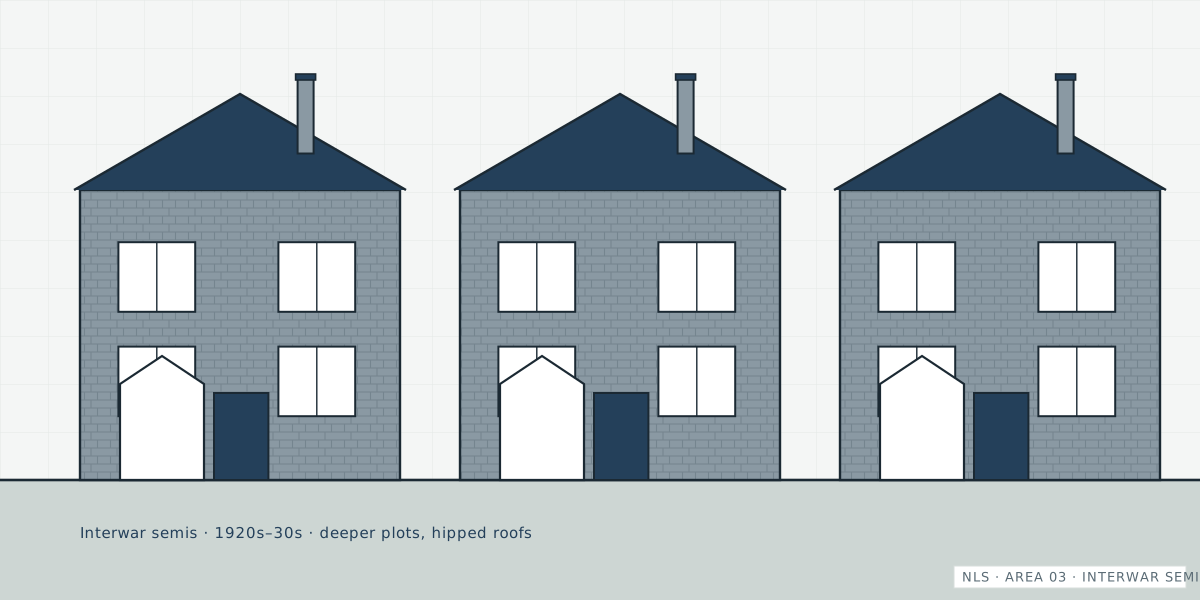
Enfield Town and Ponders End retain Victorian and Edwardian cores, but the borough's defining fabric is interwar: mile upon mile of 1920s–30s semis and short terraces across Southgate, Palmers Green, Winchmore Hill, Oakwood and Enfield's own suburban spread — cavity walls, bay fronts, hipped roofs, generous gardens. Post-war estates and modern development fill eastward toward the Lea Valley.
Why Enfield properties experience structural movement
Most of suburban Enfield is mapped on London Clay; the Lea Valley's eastern edge brings river gravels and alluvium with different (sometimes softer) behaviour. Interwar foundations are typically modest strip footings well within reach of seasonal clay moisture change, and the era's street-tree planting has now matured into exactly the high-demand specimens that dry clay in summer. Original drainage is approaching a century old. Wall ties of the period corrode on schedule. None of this is exotic — it's the standard suburban-London structural syllabus, and Enfield teaches all of it.
Common structural concerns in Enfield
- Seasonal diagonal cracking at bays and openings
- Horizontal mortar-bed cracking from wall-tie corrosion
- Movement over leaking original drainage
- Tree-related clay shrinkage on planted avenues
- Softer ground behaviour toward the Lea Valley
- Extensions and porches settling against the main house
Property risk overview — Enfield
| Property type | Typical era | Points worth checking |
|---|---|---|
| Interwar semi | 1920s–1939 | Bay movement; wall ties; trees on clay; original drains |
| Victorian terrace (Enfield Town/Ponders End) | 1870s–1900s | Shallow footings; solid-wall cracking; alteration history |
| Lea Valley post-war/modern | 1950s–present | Ground variability; check made ground and levels history |
| Bungalow | Interwar–1960s | Light structure registers movement readily; drainage and trees |
Advice for homebuyers in Enfield
For interwar Enfield semis, three cheap checks repay themselves: sight along the outer walls for bowing and horizontal cracking (ties), note every substantial tree within ~15m of the footprint, and ask when the drains were last surveyed. Where movement is flagged, an investigation ordered before renegotiation keeps you in control of the numbers.
Advice for landlords in Enfield
Portfolio landlords across Enfield's rental stock should treat post-dry-summer autumns as inspection season — that's when clay cracking peaks. A dated photo log per property and prompt assessment of anything diagonal or widening keeps insurance positions clean and repairs proportionate.
When to call a structural engineer
Arrange an assessment promptly if cracking is new, widening or reopening; if doors and windows have started sticking without an obvious cause; if floors slope or bounce; if walls bulge or lean; or if a survey, lender or insurer has asked for an engineer's opinion. Early assessment is almost always cheaper than late repair — and a documented "no significant issue" protects a future sale. The when-to-call guide covers the decision in detail.