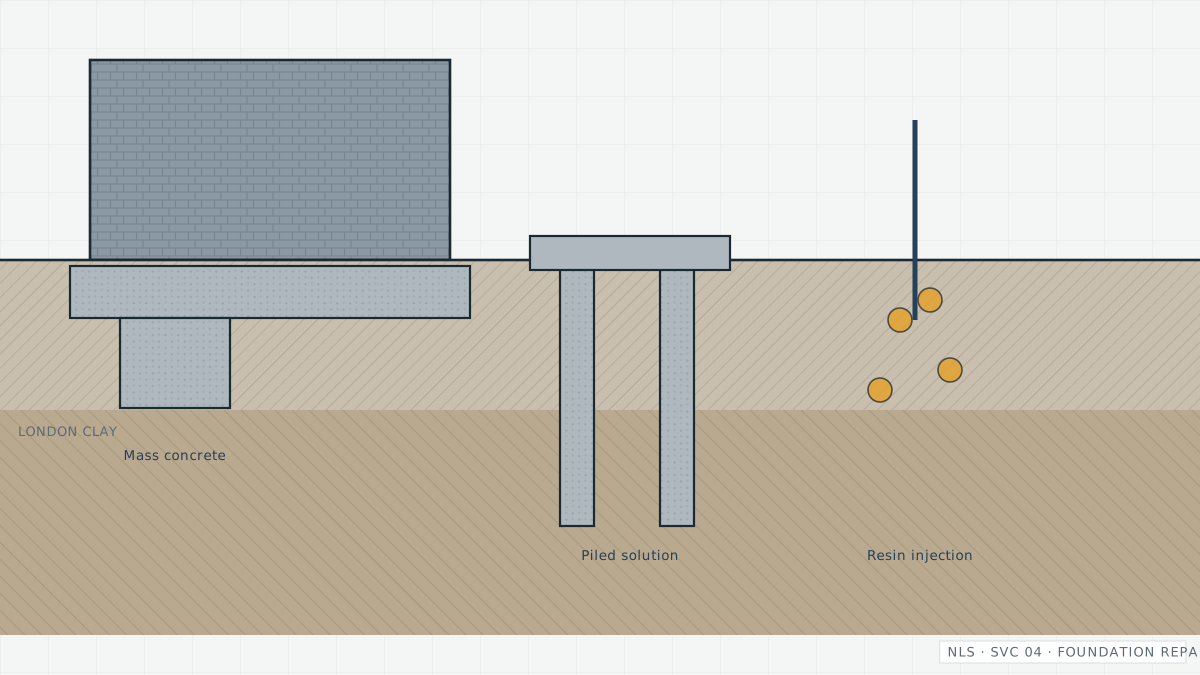
How do you fix foundation problems? In cause order: where drains or vegetation caused the movement, fix those and repair the superstructure damage — the most common complete solution. Where masonry needs reconnecting, crack stitching and repointing restore integrity. Where ground bearing is deficient in suitable soils, resin injection can improve it. Where foundations are fundamentally inadequate, underpinning deepens or strengthens them. Investigation determines which tier applies; skipping it guarantees paying for the wrong one.
The repair ladder
| Tier | Remedy | Indicative cost (London) | Applies when |
|---|---|---|---|
| 1 | Cause removal (drain repair, tree management) + superstructure repair | £2,000–£8,000 | Movement driven by leaks or vegetation — the most common case |
| 2 | Crack stitching, repointing, local rebuilding | £500–£3,000 | Movement arrested; masonry needs restitching |
| 3 | Resin/geopolymer injection | £5,000–£15,000+ | Bearing improvement viable in the soil present |
| 4 | Underpinning (mass/beam/piled) | £10,000–£50,000+ | Foundations inadequate; movement persists post-cause-removal |
Costs are indicative whole-job planning ranges, not quotations; contractors price engineered specifications.
Why cause-first is non-negotiable
Repairing damage without removing its cause buys redecorated cracks that reopen. Repairing at a higher tier than the cause demands buys disruption and expense without extra benefit — underpinning a wall whose drain was leaking fixes nothing the drain repair wouldn't, at ten times the price. The investigation sequence (assessment → drainage survey → trial pits/monitoring as needed) exists to place your case on the ladder correctly. Insurers follow the same logic, which is why accepted claims fund investigation before remedy.
Getting comparable quotes
Quotes are only comparable against a fixed specification. The failure mode: three contractors diagnose three different causes and price three different jobs — the numbers can't be compared and the cheapest may be treating the wrong thing. The fix: an independent engineered specification first, then contractors price the identical defined scope. This single document typically saves multiples of its cost and is your protection in any later dispute.
After the repair
Close the loop: post-works verification that movement has ceased (monitoring where appropriate), completion certificates from Building Control where applicable, and a permanent file — investigation, specification, invoices, certificates, warranties. Future buyers, lenders and insurers will ask; a complete file converts 'previous foundation issue' from a negotiation weapon into a footnote.
This guide provides general information only and is not formal structural advice for any specific property. The cause of movement or damage should always be established by proper professional assessment before repairs are commissioned.