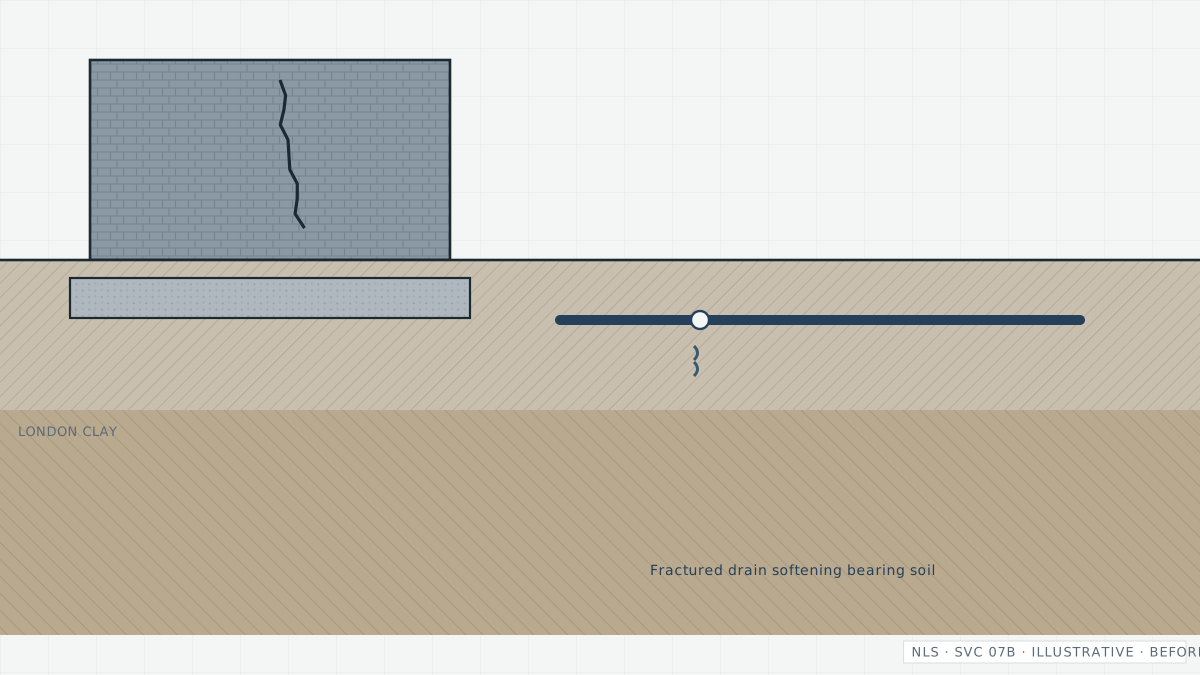
Can leaking drains cause subsidence? Yes — drainage defects are consistently among the leading causes of subsidence claims in London. Leaks soften and erode the soil supporting foundations (particularly washing fines from granular ground and softening clay), and moisture-seeking tree roots exploit cracked pipes, accelerating clay shrinkage. Movement concentrated near bathrooms, kitchens, gullies or drain runs is the classic signature, and CCTV drain surveys are the standard first investigation.
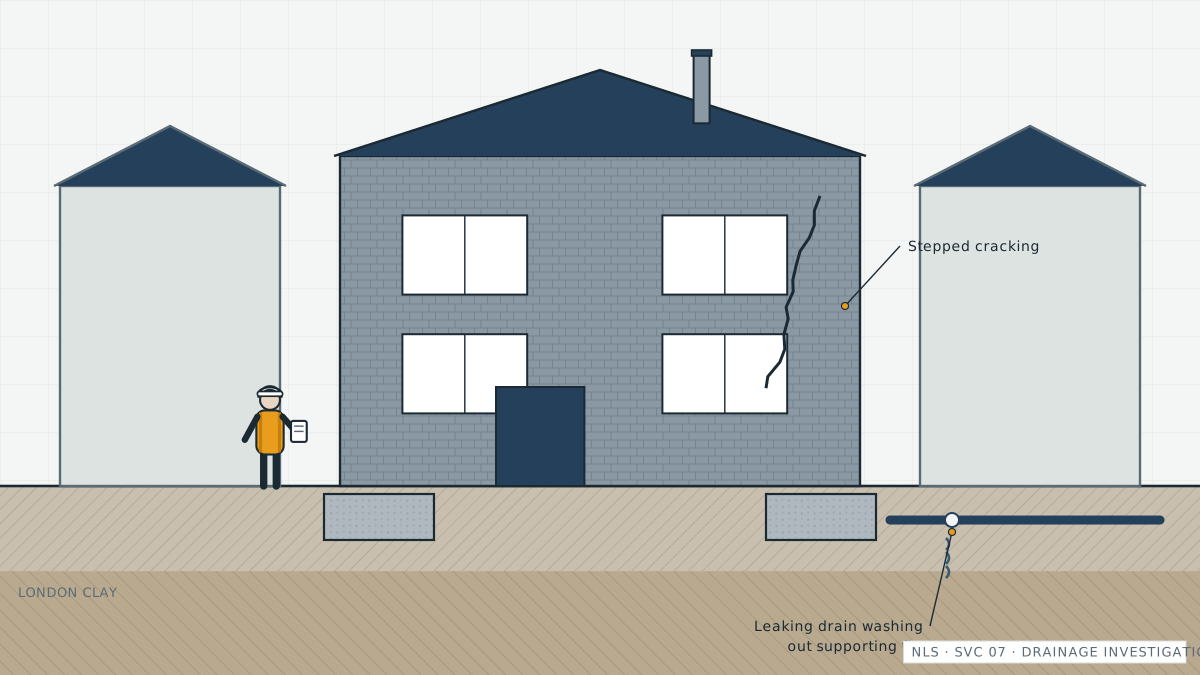
When cracking appears near the back corner of a Victorian terrace — where the soil pipe, gully and kitchen drainage congregate — the drains are the first suspects, not the last. A drainage-related structural investigation joins two disciplines: the drainage survey that finds the defect, and the engineering assessment that connects it to the movement and specifies the proportionate fix. Done in that order, many feared underpinning projects become drain repairs.
When is this service needed?
- Cracking or movement concentrated near drain runs, gullies or bathrooms
- A subsidence investigation needs the drainage cause tested
- Persistent damp ground, sinking paving or vegetation flourishing along a drain line
- An insurer requires a CCTV survey as part of a claim
- Pre-purchase due diligence on a property with movement history
Warning signs to look for
- Movement localised to rear corners and drainage congregation points
- Sinking or lifting paving slabs along drain runs
- Unusually lush vegetation tracing a line across the garden
- Recurring blockages suggesting displaced or fractured pipes
- Damp patches at low level near internal soil stacks
How the assessment process works
Desk and site review
Drain layouts, movement locations and vegetation are mapped together to test whether a drainage cause is plausible.
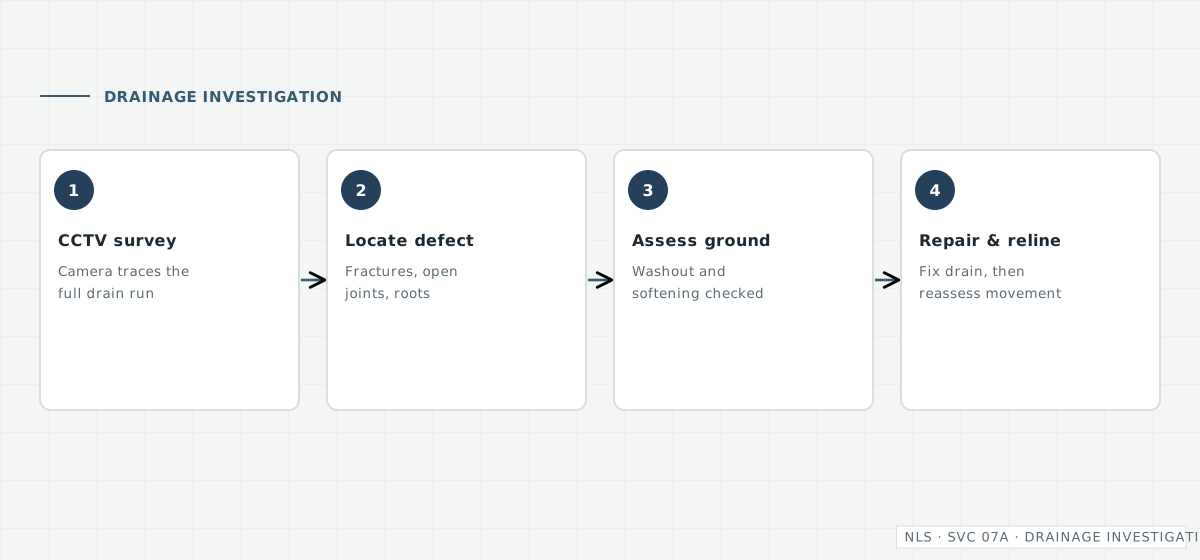
CCTV survey
A camera survey records the pipe condition — fractures, displaced joints, root ingress, open joints — with positional accuracy.
Engineering interpretation
Defects are correlated with the structural damage: an engineer judges whether the drain defect explains the movement pattern.
Remedy specification
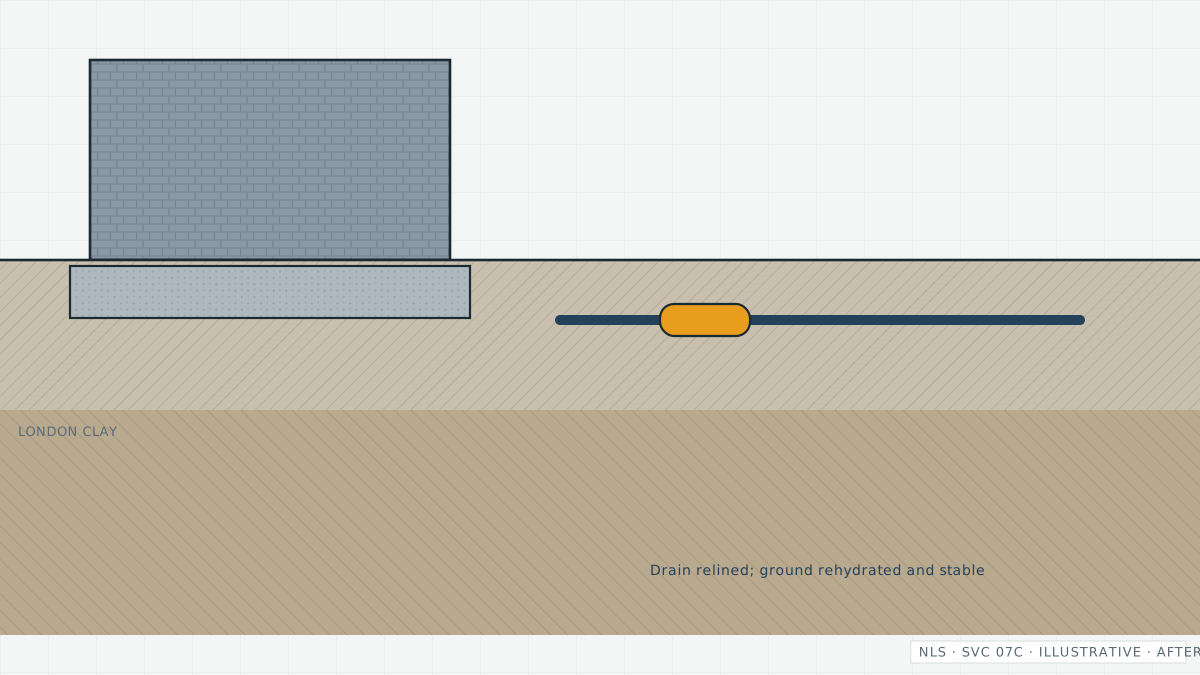
Repairs are specified proportionately — patch lining, full lining or excavation — followed by structural repair once ground conditions stabilise.
What you typically receive
- A CCTV drainage survey report with defect locations
- An engineering opinion linking (or ruling out) drains as the cause
- A proportionate repair specification (lining vs excavation)
- Guidance on sequencing: fix cause, allow stabilisation, repair damage
- Documentation for insurers and future buyers
Investigation and repair costs
Domestic CCTV drain surveys in London typically cost around £150–£400. Repairs range from patch lining a single defect (£300–£800 indicative) through full-run lining to excavation and replacement (£1,000–£5,000+ depending on depth and access). Where subsidence is a valid insurance claim, investigation and repair of the operative cause are commonly covered. Figures indicative; contractors price surveyed defects.
Who this service is for
- Homeowners with movement near drainage
- Subsidence claimants and their insurers
- Buyers doing due diligence on period property
- Landlords with recurring drainage and cracking issues
North London property context
North London still runs substantially on Victorian and Edwardian clay drainage — beautiful pipes a century past design life, laid shallow beside equally shallow footings on shrinkable clay. Root ingress from street planes is endemic, and the combined effect (leak softens clay, roots dry it) is the borough engineer's daily bread from Enfield to Camden. Thames Water owns most shared sewers since 2011 transfer; private laterals within your boundary remain the owner's responsibility — a distinction that matters when repairs are priced.