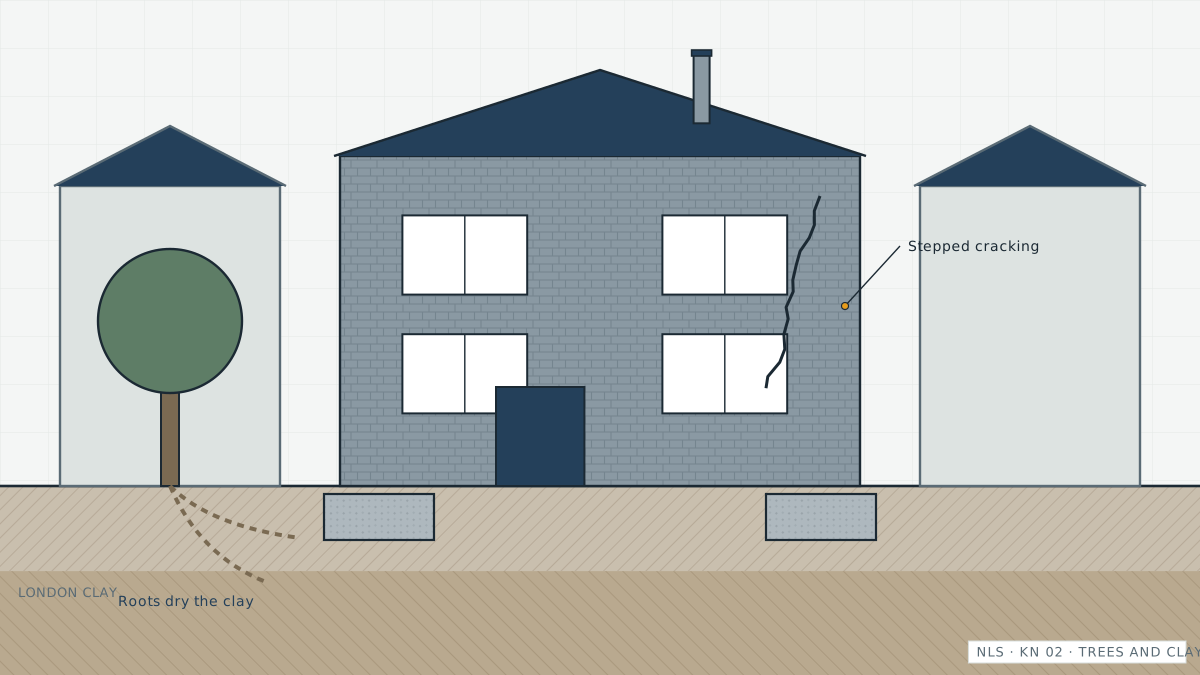
Do tree roots damage house foundations? Almost never by force — roots exploit existing gaps but don't burst sound foundations. The real mechanism on shrinkable clay is moisture extraction: roots dry the clay, the clay shrinks, shallow foundations move. Risk scales with species water demand (oak, poplar, willow, plane highest), tree size, distance (roughly within 10–20m of shallow footings for large high-demand species), and soil shrinkability. Removal without advice risks heave — clay swelling as moisture returns.
The real mechanism
On non-shrinkable soils, trees and foundations coexist almost indifferently. On shrinkable clay — London's default — roots extract moisture seasonally and in drought persistently, desiccating clay to depths that outreach shallow Victorian and interwar footings. The ground shrinks; the foundation follows; the classic diagonal cracking appears, worst in late summer, easing over winter. Direct root damage is largely confined to drains (roots enter defective joints seeking water, then expand) and light structures — paths, garden walls, shallow porches.
Which trees, how close
| Water demand | Typical species | Indicative influence near shallow footings on clay |
|---|---|---|
| High | Oak, poplar, willow, elm, London plane, eucalyptus | Commonly implicated within ~10–20m+ when mature |
| Moderate | Ash, lime, sycamore, horse chestnut, most fruit trees | Influence at shorter ranges, size-dependent |
| Lower | Birch, holly, magnolia, most conifers | Rarely implicated at normal garden distances |
Indicative only — mature height, soil, climate and foundation depth all move the numbers, which is why guidance (NHBC tables for new foundations) works species-by-species and case-by-case.
Heave: the trap in 'just cut it down'
Remove a mature tree that has long dried the clay beneath a building, and that clay rehydrates and swells — sometimes for years — lifting foundations unevenly. Heave damage can rival the subsidence it replaced, and it's why the correct response to a suspected tree implication is never immediate felling. Managed options: crown reduction and pollarding (reducing demand while keeping moisture balance), phased works, root barriers in specific cases, and — for new construction — foundations designed for the tree per NHBC guidance rather than the tree removed for the foundations.
Ownership, neighbours and TPOs
Practicalities: council street trees are the highway authority's — implication claims run through the council's insurers, with arboricultural and engineering evidence doing the work. Neighbours' trees engage nuisance principles; evidence first, solicitor's letters second. Tree Preservation Orders and conservation-area status make unauthorised works an offence regardless of ownership — check before touching anything substantial. In every case the sequence holds: engineering assessment establishing implication → arboricultural input → managed intervention → monitoring. Trees are co-defendants, not automatic culprits; plenty of 'tree damage' turns out to be the drain the roots were drinking from.
This guide provides general information only and is not formal structural advice for any specific property. The cause of movement or damage should always be established by proper professional assessment before repairs are commissioned.