When does the Party Wall Act apply? The Act applies to three situations: work directly to a shared (party) wall or structure — such as inserting beams for a loft conversion or removing a chimney breast; building a new wall at or astride the boundary; and excavating within 3 metres of a neighbour's structure and deeper than their foundations (or within 6 metres in defined deeper cases) — which captures most extensions, basements and underpinning. Written notice to adjoining owners is required before this work starts.
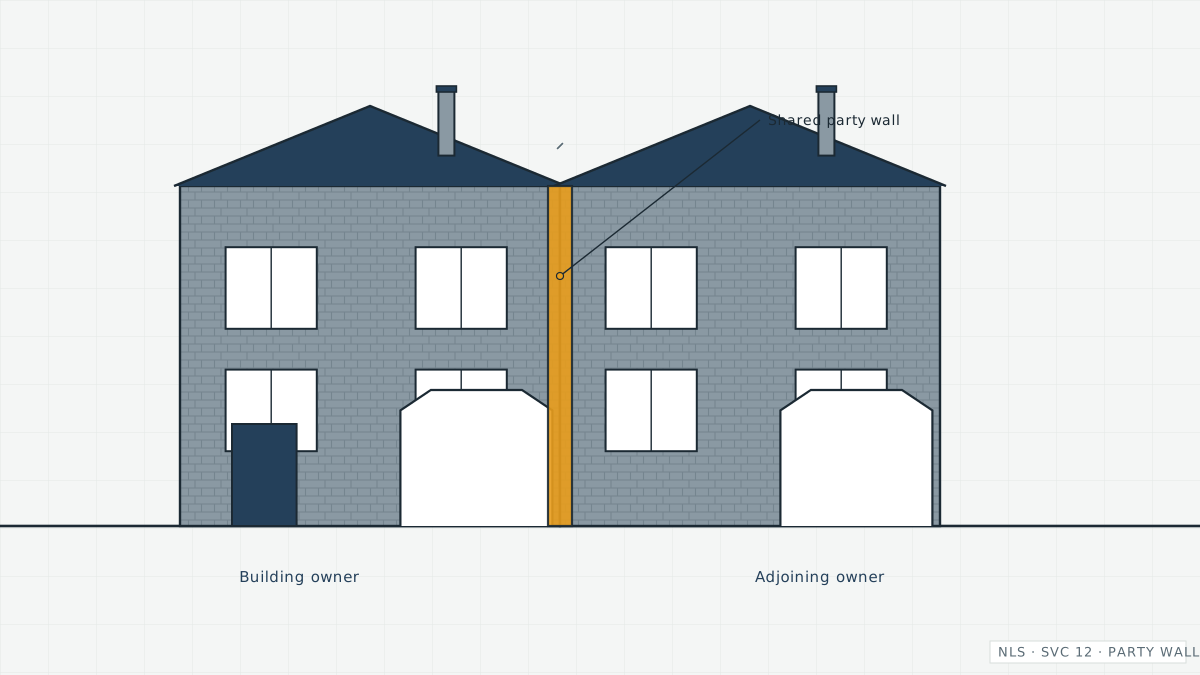
Nearly every North London structural project happens against a shared wall: terraces and semis dominate the stock, and flats stack owners vertically. That makes party wall procedure routine here rather than exceptional. The process is genuinely protective — a schedule of condition before work and an award defining how work proceeds mean that if damage occurs, liability is clear, and if it doesn't, both owners have proof.
When is this service needed?
- Loft conversion beams bearing into a party wall
- Rear or side extensions excavating within 3m of next door
- Basement works or underpinning (the 3m/6m deeper-excavation rules)
- Chimney breast removal from a party wall
- Damp-proof course insertion, wall raising, thickening or rebuilding of a shared wall
- You have received a party wall notice from a neighbour and need advice
Warning signs to look for
- A builder's programme that assumes starting 'next month' with no notices served
- A neighbour's skip arriving with no notice received
- Cracking appearing during next door's basement dig with no schedule of condition
- A stalled project because notices were served incorrectly
How the assessment process works
Notice
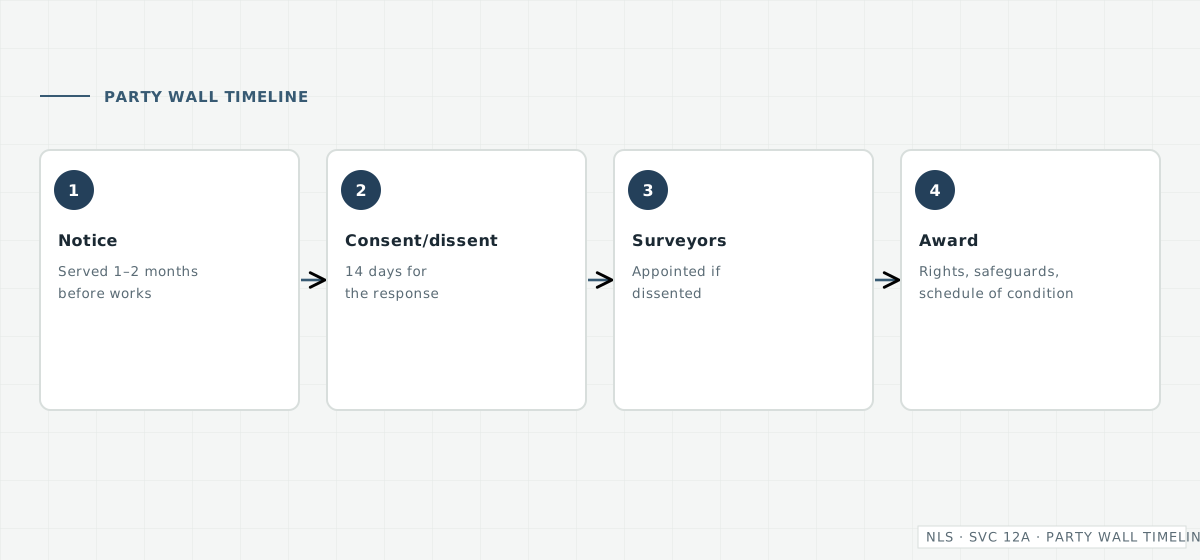
The building owner serves written notice — 2 months ahead for party structure works, 1 month for excavation/boundary works. Templates and timing matter.
Response
Neighbours consent (work proceeds, ideally with a condition record) or dissent, which triggers the formal survey process — dissent is normal, not hostile.
Award
Appointed surveyor(s) prepare a schedule of condition and a Party Wall Award setting out how and when the work proceeds and how any damage is addressed.
Works and close-out
Work proceeds under the award; on completion, condition is checked against the schedule and any damage is resolved under the award's mechanism.
What you typically receive
- Advice on whether and how the Act applies to your project
- Correctly drafted and served notices
- Schedules of condition recorded before work
- A Party Wall Award through the appointed surveyor(s)
- Support for adjoining owners who have received notice
Party wall costs
Where neighbours consent, cost can be minimal. Where surveyors are appointed, London fees typically run from around £700–£1,500 per adjoining owner for straightforward awards (loft beams, standard extensions), and materially more for basements and underpinning. The building owner normally pays reasonable fees for both sides. Budget per neighbouring owner — a mid-terrace project may involve two.
Who this service is for
- Building owners planning lofts, extensions, basements or underpinning
- Adjoining owners who have received a notice
- Developers converting or refurbishing terraced stock
- Leaseholders and freeholders in flat conversions
North London property context
Party wall work is a fact of life across North London's terraces and mansion blocks. Basement schemes in Hampstead, Highgate and Camden — some of London's most active basement territory — engage the Act's excavation provisions most heavily, while the everyday loft dormer from Kentish Town to Crouch End engages its party-structure provisions. Boroughs including Camden operate additional basement planning policies on top of the Act.