What should Hampstead owners know structurally? Three things. The ground changes down the hill — free-draining sands high up, shrinkable clay below — so neighbouring streets can behave differently. The stock is old enough that historic movement is the norm, making 'live or historic?' the key diagnostic question. And basement development has been so extensive that due diligence on past excavations — yours and your neighbours' — is now standard practice for purchases and projects alike.
Structural services available in Hampstead
Property owners in Hampstead most commonly arrange structural surveys, crack assessments, subsidence investigations and design work for extensions and loft conversions. Your enquiry is triaged by phone or form, then arranged with an appropriate independent qualified provider covering Hampstead.
Hampstead's housing stock
From Church Row's Georgian set piece through the Victorian and Arts-and-Crafts fabric spreading toward the Heath, Belsize and Frognal, Hampstead's houses are old, individual and endlessly altered. Flat conversion is common in the larger stock; mansion blocks line the fringes; and beneath a remarkable proportion of it all sit basements — original cellars, Victorian service floors, and two decades of modern excavation.
Why Hampstead properties experience structural movement
Geology first: the hilltop's sandy beds shed water and stand firm; the slopes' London Clay shrinks and swells; springs emerge where the two meet — a boundary that has shaped Hampstead's building behaviour for centuries. Age second: pre-Victorian and Victorian masonry carries settled distortion that alarms surveys but usually just needs classifying. Alteration third: extensions, conversions and above all basements have changed loads and ground conditions plot by plot, making documentary due diligence unusually valuable here.
Common structural concerns in Hampstead
- Historic-versus-live movement classification in old masonry
- Basement legacy: past excavations, waterproofing-structure interfaces, neighbour effects
- Springline and slope drainage issues where sand meets clay
- Party wall matters on nearly every significant project
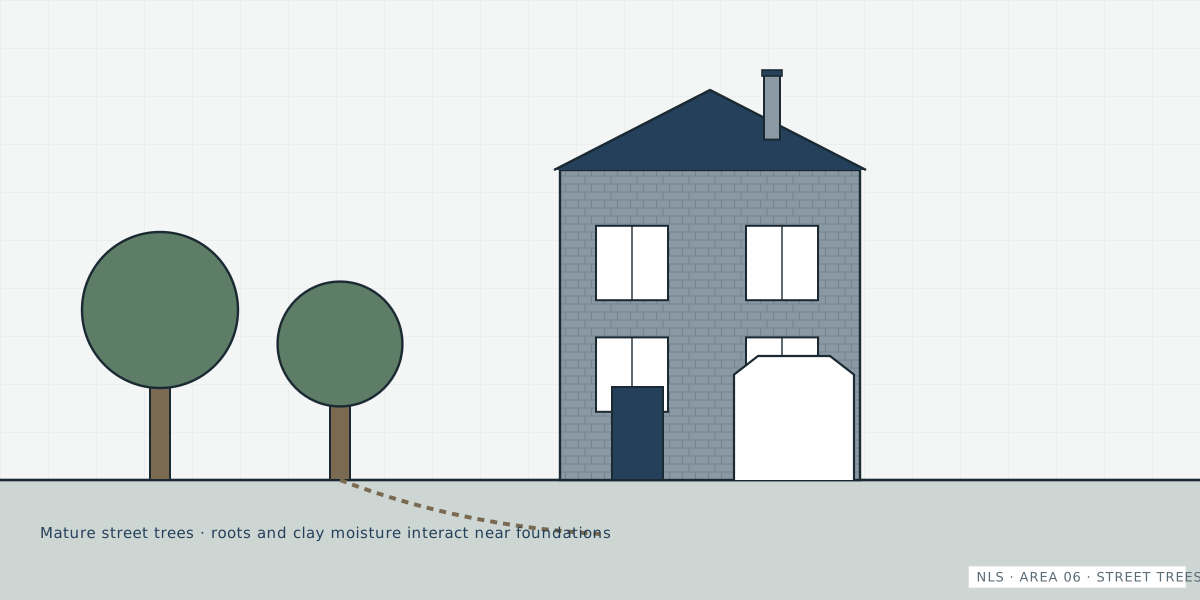
- Clay movement and trees on the lower streets
- Retaining walls in stepped gardens
Property risk overview — Hampstead
| Property type | Typical era | Points worth checking |
|---|---|---|
| Georgian house | 1700s–1830s | Long movement history; timber elements; cellar condition; conservation limits |
| Victorian/Arts-and-Crafts house | 1840s–1910 | Slope and springline effects; alterations; garden retaining structures |
| Basement-extended house | Modern alteration | Engineering records; party wall awards; monitoring history |
| Mansion flat | 1890s–1930s | Communal structure; parapets and balconies; alteration coordination |
Advice for homebuyers in Hampstead
For any significant Hampstead purchase, assemble the structural dossier early: engineer reports, basement drawings, party wall awards, monitoring results. Where a gap exists at a flagged issue, commission a focused survey pre-exchange — at these values, hundreds spent on certainty is the cheapest money in the deal.
Advice for landlords in Hampstead
Institutional-quality record keeping suits Hampstead assets: a structural file per property, photographic baselines, and immediate schedule-of-condition engagement whenever a neighbour serves basement or extension notices. The Heath fringe's premiums are earned by houses whose history is documented.
When to call a structural engineer
Arrange an assessment promptly if cracking is new, widening or reopening; if doors and windows have started sticking without an obvious cause; if floors slope or bounce; if walls bulge or lean; or if a survey, lender or insurer has asked for an engineer's opinion. Early assessment is almost always cheaper than late repair — and a documented "no significant issue" protects a future sale. The when-to-call guide covers the decision in detail.