What makes Highgate structurally distinctive? Elevation and age. The hilltop's older geology (sandier beds over the clay) meets London Clay downslope, so ground behaviour varies within short distances; Georgian and early-Victorian houses carry centuries of settled distortion; hillside sites bring retaining walls and stepped foundations; and the modern basement era has added deep excavations beside old shallow footings — with the party wall procedures that follow.
Structural services available in Highgate
Property owners in Highgate most commonly arrange structural surveys, crack assessments, subsidence investigations and design work for extensions and loft conversions. Your enquiry is triaged by phone or form, then arranged with an appropriate independent qualified provider covering Highgate.
Highgate's housing stock
Highgate Village preserves Georgian terraces and villas around the High Street and Pond Square, surrounded by substantial Victorian development down the hill's flanks and 20th-century additions beyond. The stock is high-value, heavily protected by conservation designation, frequently extended downward where it cannot extend outward — and old enough that 'character' and 'movement history' are often the same thing.
Why Highgate properties experience structural movement
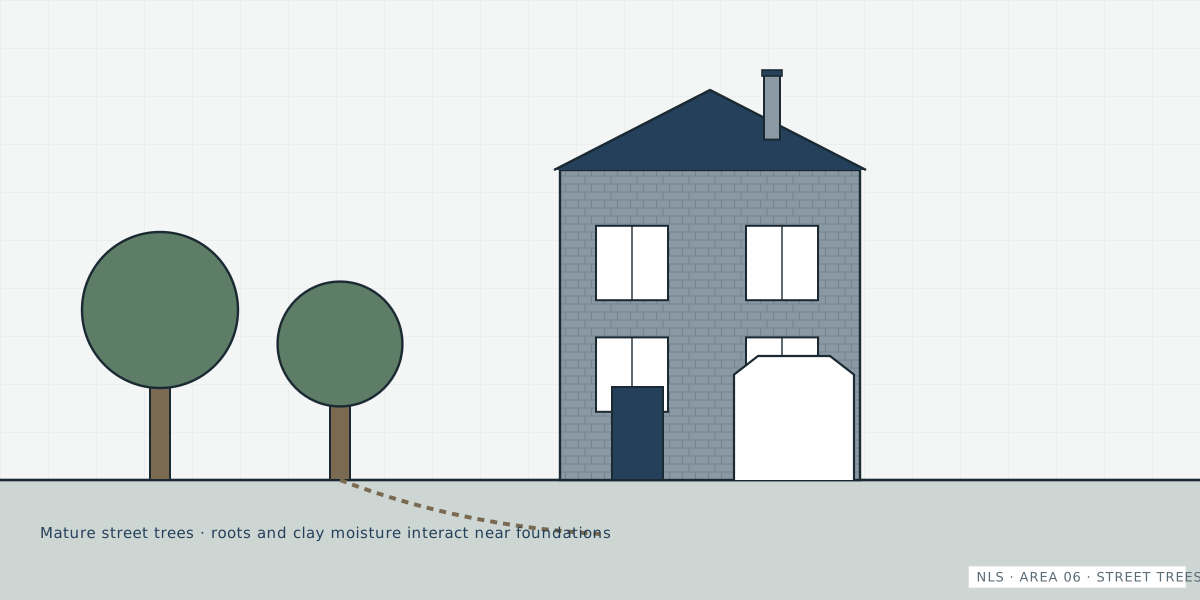
On the summit, freer-draining sandy beds behave differently from the shrinkable clay of the lower slopes — one hill, two regimes, and houses that span the boundary. Age contributes benign historic distortion that must be distinguished from live movement. Slopes contribute retained terraces and downhill creep questions. And basement construction — this is prime basement territory — contributes both real engineering and real neighbour anxiety, mediated through the Party Wall Act and borough basement policies.
Common structural concerns in Highgate
- Distinguishing historic distortion from live movement in old masonry
- Neighbouring basement excavations and party wall matters
- Hillside retaining walls and stepped foundations
- Ground-regime changes across the hill (sand over clay)
- Timber lintels, bressummers and old repairs in Georgian stock
- Tree-influenced clay movement on the lower slopes
Property risk overview — Highgate
| Property type | Typical era | Points worth checking |
|---|---|---|
| Georgian house/terrace | 1700s–1830s | Historic movement record; timber structure; basements; conservation constraints |
| Victorian villa/terrace | 1840s–1900 | Slope effects; retaining walls; alteration history |
| Basement-extended house | Recently altered | Design/records quality; neighbour condition schedules; waterproof-structure interface |
| Lower-slope clay-belt house | Any | Seasonal clay movement; trees; drainage age |
Advice for homebuyers in Highgate
In Highgate, buy the paperwork as much as the house: past engineer reports, monitoring records, basement design documents and party wall awards tell you what the building has already survived. 'Movement noted' in a survey here is often a 200-year-old non-event — but confirm it with a focused report rather than assume it.
Advice for landlords in Highgate
High-value lettings deserve a structural file: dated photos of known historic cracks, past reports, and prompt professional triage of anything new — particularly during neighbouring basement works, when your schedule-of-condition evidence is what protects the asset.
When to call a structural engineer
Arrange an assessment promptly if cracking is new, widening or reopening; if doors and windows have started sticking without an obvious cause; if floors slope or bounce; if walls bulge or lean; or if a survey, lender or insurer has asked for an engineer's opinion. Early assessment is almost always cheaper than late repair — and a documented "no significant issue" protects a future sale. The when-to-call guide covers the decision in detail.