What are the common structural jobs in Golders Green? Extension and loft structural design lead — this is prolific home-improvement territory — followed by crack and movement assessments on Edwardian and interwar houses cycling on clay near mature garden trees, and pre-purchase engineer reports where surveys flag movement or undocumented alterations in much-modified family homes.
Structural services available in Golders Green
Property owners in Golders Green most commonly arrange structural surveys, crack assessments, subsidence investigations and design work for extensions and loft conversions. Your enquiry is triaged by phone or form, then arranged with an appropriate independent qualified provider covering Golders Green.
Golders Green's housing stock
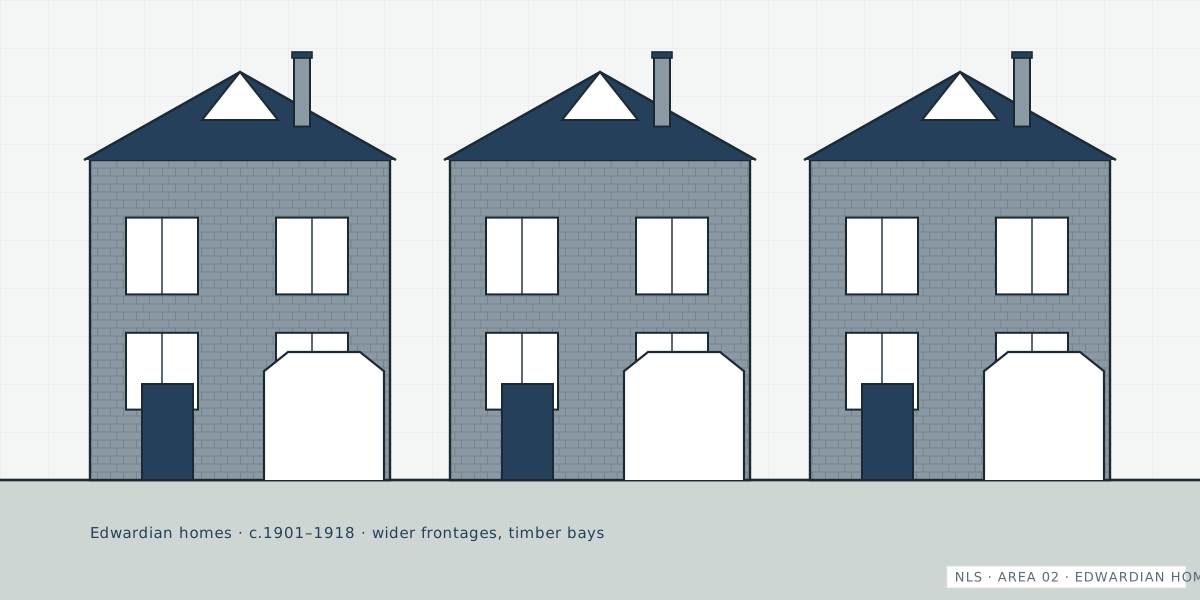
The 1907 Underground station made the suburb: substantial Edwardian houses spread first, followed by confident interwar semis and detached homes across the Garden Suburb's borders, Temple Fortune and toward Brent Cross. Plots are generous, which is why side extensions, rear extensions, loft conversions and full-width remodels are so prevalent — many houses have been enlarged more than once.
Why Golders Green properties experience structural movement
Clay underlies the district, cycling shallow Edwardian and interwar footings seasonally, with the area's abundant garden trees — many now fully mature — supplying the moisture demand. But the distinctive local layer is alteration intensity: repeated extensions create junction after junction between structures of different ages and depths, each a potential differential-movement line, and internal remodelling has rerouted load paths in a large share of houses. Movement questions here are as often alteration questions as ground questions.
Common structural concerns in Golders Green
- Junction cracking between multiple generations of extension
- Seasonal clay movement near mature garden trees
- Undocumented internal remodelling and wall removals
- Wall-tie corrosion in interwar cavity stock
- Loft conversions needing calculations or retrospective assessment
- Drainage rerouted repeatedly around extensions
Property risk overview — Golders Green
| Property type | Typical era | Points worth checking |
|---|---|---|
| Edwardian house | 1907–1914 | Bays and wide openings; alteration layers; drainage age |
| Interwar semi/detached | 1920s–1939 | Wall ties; trees on clay; extension junctions |
| Multi-extended house | Various | Differential movement between phases; records for each phase |
| Garden Suburb-border stock | 1907–1930s | Design-code constraints on works; established trees |
Advice for homebuyers in Golders Green
Count the extensions, then count the certificates — the gap between those numbers is your due-diligence list. Junction cracks between building phases are the local signature symptom; a crack assessment distinguishes benign differential settlement from anything that needs remedy, and prices it either way.
Advice for landlords in Golders Green
Large altered family houses in multiple occupation carry more structural history than their paperwork usually shows; landlords should commission a baseline structural inspection once, keep it on file, and update after any works — a small cost against licensing, insurance and resale requirements.
When to call a structural engineer
Arrange an assessment promptly if cracking is new, widening or reopening; if doors and windows have started sticking without an obvious cause; if floors slope or bounce; if walls bulge or lean; or if a survey, lender or insurer has asked for an engineer's opinion. Early assessment is almost always cheaper than late repair — and a documented "no significant issue" protects a future sale. The when-to-call guide covers the decision in detail.