What structural issues come up in West Hampstead? Flat-market classics: lender-flagged cracking in converted terraces, alteration due diligence across stacked leaseholds, mansion-block communal elements (parapets, balconies, bay stacks), and design work as the remaining houses extend and convert lofts. Three rail corridors thread the area, adding occasional boundary and vibration questions for adjacent stock, on the usual clay-belt ground.
Structural services available in West Hampstead
Property owners in West Hampstead most commonly arrange structural surveys, crack assessments, subsidence investigations and design work for extensions and loft conversions. Your enquiry is triaged by phone or form, then arranged with an appropriate independent qualified provider covering West Hampstead.
West Hampstead's housing stock
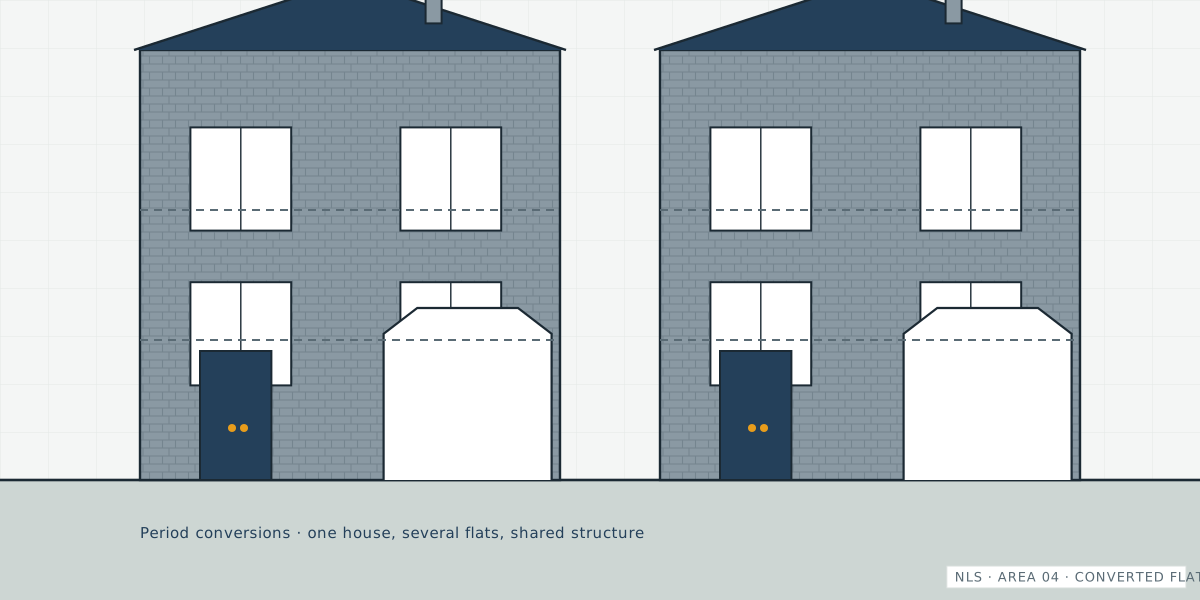
Built rapidly in the 1880s–1900s around its railway stations, West Hampstead runs to consistent red-brick terraces — most now flats — and handsome mansion blocks along the main roads, with Edwardian and interwar edges toward Fortune Green and Kilburn. It is dense, leasehold-dominated, and constantly trading: structural life here is lived through surveys, leases and managing agents.
Why West Hampstead properties experience structural movement
Late-Victorian terraces converted to flats carry the standard alteration inheritance — walls and chimney breasts removed flat by flat, records scattered — while tall bay stacks and parapets weather a century of exposure. Mansion blocks add communal structure whose repairs depend on collective governance. Beneath, London Clay cycles seasonally with the street trees; alongside, rail cuttings introduce boundary retaining structures older than anyone's records. Nothing exotic — but plenty to document.
Common structural concerns in West Hampstead
- Mortgage-stage cracking queries in converted terraces
- Alteration certificates scattered across leaseholds
- Bay-stack and parapet condition on tall frontages
- Mansion-block communal repairs and their governance
- Rail-boundary retaining structures
- Seasonal clay movement; drainage age
Property risk overview — West Hampstead
| Property type | Typical era | Points worth checking |
|---|---|---|
| Converted red-brick terrace | 1880s–1900s | Cross-flat alterations; bay stacks; parapets; drainage |
| Mansion block | 1890s–1910s | Communal structure; balconies; repair history and governance |
| Retained house | 1880s–1900s | Extension/loft design; party walls; clay movement |
| Rail-adjacent property | Various | Boundary walls and cuttings; access; vibration queries |
Advice for homebuyers in West Hampstead
Buying an NW6 flat, read the building before the flat: management company minutes, communal repair history, and the alteration file tell you more than fresh paint will. Valuer-flagged cracking is routine here and clears quickly with a focused report — order it early to keep the chain calm.
Advice for landlords in West Hampstead
West Hampstead landlords hold shared structures by definition; keep flat-level certificates impeccable, engage with block-level maintenance rather than deferring it, and log any tenant-reported movement immediately. Blocks with organised owners spend less per flat on every structural issue.
When to call a structural engineer
Arrange an assessment promptly if cracking is new, widening or reopening; if doors and windows have started sticking without an obvious cause; if floors slope or bounce; if walls bulge or lean; or if a survey, lender or insurer has asked for an engineer's opinion. Early assessment is almost always cheaper than late repair — and a documented "no significant issue" protects a future sale. The when-to-call guide covers the decision in detail.